

Everyday Routines · Formats & Storage
Forever Stamp Rolls vs. Booklets
The postal value may be identical, but the experience is not. One format sits beside a stack of outgoing envelopes; the other slips into a desk drawer, planner, or travel folder.
Start with the two formats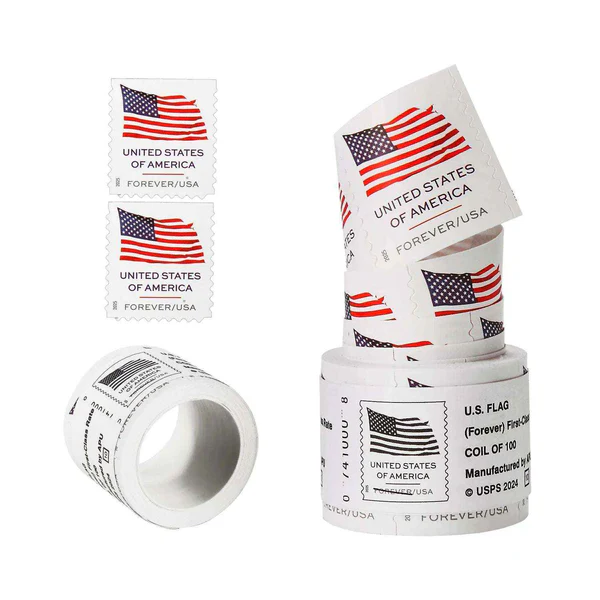
01 · The short answer
Choose a format by workflow, not by postal value
A genuine, unused ordinary Forever Stamp has the same qualifying one-ounce letter value whether it came from a coil, booklet, pane, or sheet. Rolls and booklets change how stamps are stored, counted, carried, and dispensed—not what each stamp contributes to postage.
A roll is usually the better fit when stamps are used repeatedly at one work surface. A booklet is often more comfortable when mailing is occasional, stamps need to travel, or several designs are kept for different types of correspondence.
The most useful comparison is therefore not “Which one is worth more?” It is “Which format creates less friction in my actual routine?”
Roll or coil
A wound strip supports repetitive dispensing and keeps a larger supply together. It works well near a mailing station, desk organizer, or compatible dispenser.
Booklet
Flat panels are compact, easy to separate by project, and simple to carry. Multiple booklets can be stored in different locations without exposing an entire large supply.
“100 stamps in booklet format” often describes five booklets containing 20 stamps each. It does not necessarily mean one physical booklet holding 100 stamps. Check both the total quantity and the number of individual booklets.
02 · Rolls and coils
A continuous strip designed for repeated use
In official stamp descriptions, a roll is generally called a coil. Individual self-adhesive stamps are arranged in a continuous strip and wound around a center. A consumer coil of 100 is familiar, while some official issues also appear in much larger coils for high-volume mail operations.
The format’s advantage is continuity. It can remain at a dedicated mailing station, feed through a dispenser, and make repeated envelope preparation feel orderly. There are no booklet covers to open and no separate panels to keep together.
A single wound strip keeps many stamps in one place and supports repeated one-at-a-time dispensing.
The round form is most convenient when it can stay near envelopes, labels, a scale, and other mailing supplies.
Most of the strip remains wound, but the exposed outer end still needs protection from dust, moisture, and crushing.
A coil is less naturally portable than a booklet. Dropping it into an overfilled bag can flatten the roll, loosen the outer strip, or expose adhesive edges. A small rigid container or dispenser helps the roll retain its shape.
03 · Booklets
Flat, compact, and easy to divide across occasions
A modern self-adhesive booklet commonly contains 20 stamps arranged on one or more backing panels. Some are double-sided; others are part of a larger prestige booklet with editorial or commemorative material.
The format is easy to carry and easy to categorize. One booklet can stay with household bills, another with stationery, and another with wedding or holiday correspondence. A partially used booklet also reveals the remaining supply at a glance.
Booklets fit naturally into a document box, desk drawer, planner pocket, or mailing folder.
Only a modest supply needs to be handled at once, while unopened booklets can remain protected elsewhere.
Keeping several booklets makes it easy to choose different artwork for personal notes, invitations, and seasonal mail.
A booklet behaves like stationery; a coil behaves like a desk tool. The better format is the one that naturally belongs where the mailing happens.
Forever Stamp Guide · Editorial principle
04 · Side by side
The same stamp value, organized in different ways
The table compares common consumer formats. Specific stamp issues can be offered in different quantities, so package details always take precedence over a general rule.
| Question | Roll / coil | Booklet | Practical reading |
|---|---|---|---|
| Common quantity | 100 stamps for a consumer coil | 20 stamps per booklet | Five 20-stamp booklets may also be sold together as a 100-stamp pack. |
| Physical shape | Continuous wound strip | Flat backing panels | One favors dispensing; the other favors carrying and filing. |
| Best setting | Fixed desk or mailing station | Drawer, folder, planner, or travel kit | Choose according to where envelopes are usually prepared. |
| Counting inventory | May require estimating or counting the remaining strip | Empty spaces make the balance easier to see | Booklets are visually simple; coils reduce loose pieces. |
| Protection | Needs support against crushing and an enclosed outer end | Needs support against bending, folding, and surface abrasion | Keep either format on its original release backing. |
| Postal value | Current ordinary Forever one-ounce value per stamp | Current ordinary Forever one-ounce value per stamp | Format does not change the individual stamp’s qualifying value. |
05 · Choose by rhythm
Four mailing routines suggest four different answers
There is no universal winner. Frequency, location, design preference, and the number of people sharing the supply are more useful than a simple quantity comparison.
Occasional household mail
A few bills, cards, and personal letters each month rarely require a hundred stamps at the work surface. One booklet is compact and easy to count.
Weekly repeated mailing
A roll reduces interruptions when many similar envelopes are prepared at the same desk. A dispenser can keep the working end controlled.
Design-led correspondence
If artwork is matched to weddings, holidays, thank-you notes, or seasonal cards, several smaller booklets make organization easier.
Shared home or office
Keep a roll at the main mailing station and one booklet in a secondary drawer or travel folder. The formats can complement each other.
A larger supply is convenient only when it can be stored well and used predictably. The goal is not to maximize the number on the package; it is to keep a usable quantity protected and easy to find.
06 · Storage fundamentals
Stable, dry, dark, and still on the backing
Unused self-adhesive stamps are working postal supplies, but they are also printed paper objects with adhesive layers. Light, moisture, heat, dirt, pressure, and repeated bending can affect paper, ink, backing, or adhesive performance.
For ordinary household use, a clean indoor drawer or enclosed cabinet is usually more practical than an attic, basement, garage, vehicle, windowsill, or bathroom. The Smithsonian National Postal Museum advises protecting paper artifacts from direct light and large swings in temperature and humidity.
Leave unused stamps attached until needed. Do not peel them for advance sorting or stick them temporarily to another surface.
A drawer, lidded stationery box, or cabinet reduces exposure to light, airborne dirt, splashes, and handling.
Store booklets flat between clean supports. Keep coils upright or in a container that prevents flattening and loosening.
Do not leave stamps in a hot vehicle, damp basement, unconditioned attic, or next to a radiator, kettle, or humidifier.
Oil, drinks, cleaning sprays, and adhesive contamination can make an otherwise usable stamp difficult to handle.
Ordinary unused Forever Stamps do not need refrigeration or freezing. Moving paper in and out of a cold environment can introduce condensation and humidity changes; a stable indoor cabinet is simpler.
07 · Handling
Touch the backing more than the adhesive
Wash and dry your hands before handling a large supply. Peel one stamp by bending the backing slightly away from the stamp rather than digging at the printed edge with a sharp object.
For a coil, expose only the short working end. A dispenser should guide the backing without pinching, scraping, or sharply creasing the stamp. When the mailing session is over, secure the loose end without placing tape directly across usable stamps.
For a booklet, open only as far as needed and return it to a flat enclosure. Avoid folding a backing panel through the middle of an unused stamp or storing the booklet under objects with clips, ridges, or sharp corners.
Dry fingers reduce the chance of transferring oil, moisture, lotion, or dirt to the paper and backing.
Let the backing bend away from the stamp instead of pulling hard on a corner of the printed paper.
Keep the unused supply enclosed and bring out only the portion needed for the current mailing session.
08 · Inventory
A simple system keeps supplies visible and usable
Store stamps in one clearly labeled location instead of scattering them across many drawers. If several people share the supply, note which container is the active one and which packages are reserve inventory.
Use opened booklets and partial coils before opening new ones. This is not because older Forever Stamps lose their qualifying postal value; it simply reduces the number of exposed packages and makes counting easier.
Keep purchase documentation and packaging when it helps identify quantity, issue, or source. A small written count—such as “one open booklet plus three sealed booklets”—is often more useful than estimating a large pile.
Good storage is quiet: the stamps remain flat or round, the adhesive stays untouched, and the next mailing begins without a search.
Forever Stamp Guide · Everyday routine
09 · Visual comparison
The difference becomes clearest in the backing
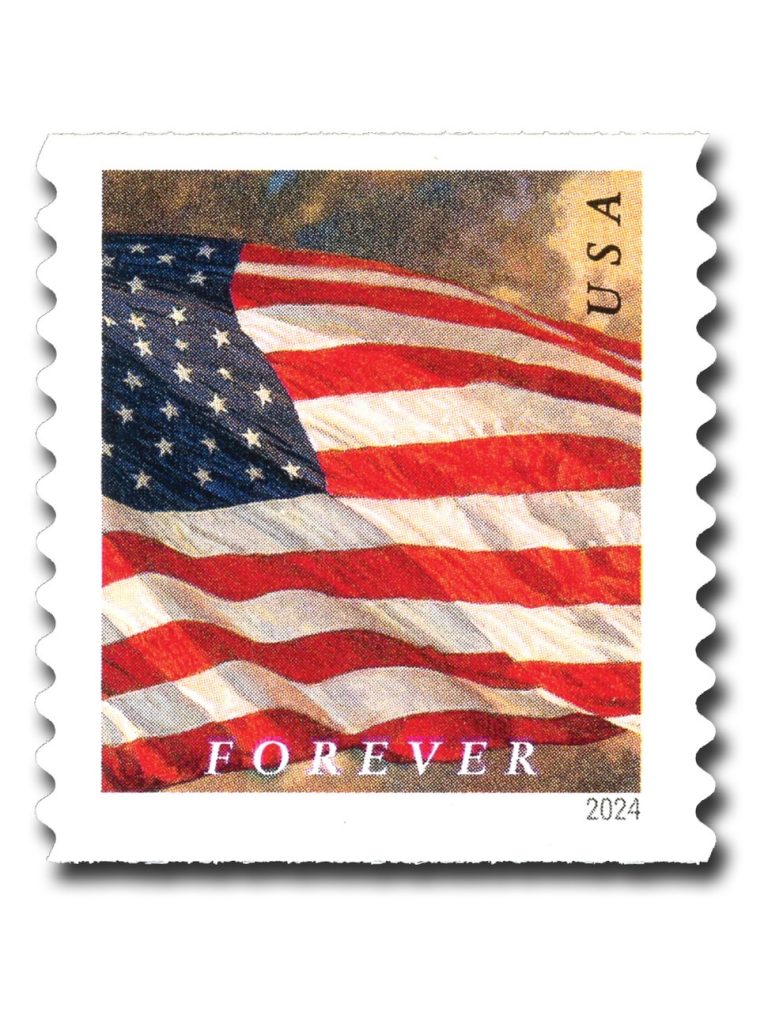
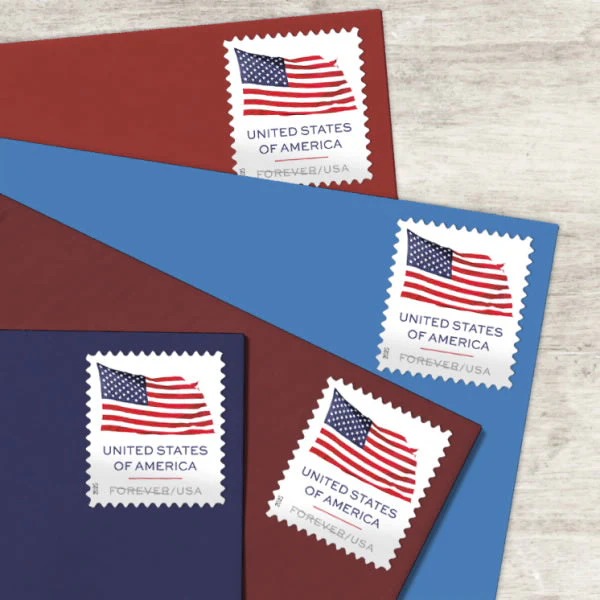
A coil emphasizes sequence and dispensing. A booklet emphasizes compact panels and division into smaller working quantities. The artwork may be similar, but the backing system changes the routine.
10 · Frequently asked
Common questions about formats and storage
What is the difference between a roll and a booklet of Forever Stamps?
A roll, officially called a coil, presents stamps in one continuous wound strip. A booklet holds stamps on compact flat backing panels. The individual ordinary Forever value is the same; the difference is physical organization, quantity, storage, and dispensing.
How many Forever Stamps are in a roll?
A common consumer coil contains 100 stamps. Some official issues are also produced in coils of 3,000 or 10,000 for higher-volume use, so always check the exact format and quantity.
How many Forever Stamps are in a booklet?
Many current booklets contain 20 stamps. A 100-stamp pack in booklet format may therefore contain five separate 20-stamp booklets.
Do rolls and booklets have different postal value?
No. If both are genuine unused ordinary Forever Stamps, each individual stamp carries the current domestic First-Class Mail one-ounce single-piece letter value regardless of its physical format.
How should unused self-adhesive Forever Stamps be stored?
Leave them on their original backing and keep them in a clean, dry, dark, temperature-stable indoor place. Protect booklets from bending and coils from crushing. Avoid direct sunlight, heat, moisture, dirt, and adhesive contact.
Should Forever Stamps be refrigerated?
No refrigeration is needed for ordinary unused stamps. A stable indoor drawer or cabinet is generally more practical because refrigeration can introduce condensation and unnecessary humidity changes.
Can a roll be stored flat?
A roll can rest on one circular side if it is protected, but avoid placing heavy objects on it or compressing it into a crowded drawer. A rigid container or dispenser helps preserve its round shape and controls the loose end.
Is a roll always better for buying in bulk?
Not necessarily. Five 20-stamp booklets and one 100-stamp roll contain the same total number of stamps. Booklets may be easier to divide among people or locations, while a roll may be easier to dispense repeatedly at one station.
11 · Editorial record
Sources and date of reference
This guide was checked on August 20, 2026. Official issue quantities can vary; the current product or stamp announcement controls for a particular design.