

Postal History · The Forever Format
Why Were Forever Stamps Created?
A small design change answered a recurring practical problem: what should happen to the stamps in your drawer when the price of mailing a letter changes?
Begin with the problem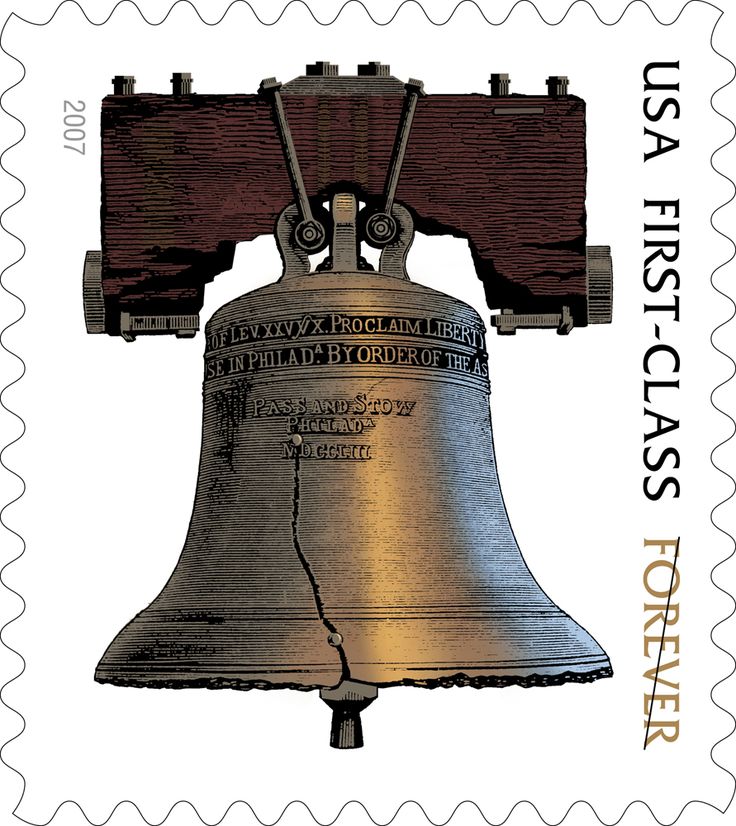
01 · Before Forever
A familiar stamp could suddenly be a few cents short
Before the Forever format, most everyday letter stamps were tied to a printed denomination. When the First-Class Mail rate changed, the stamps already sitting in homes and offices did not become useless—but they no longer covered the new rate by themselves.
A customer with older stamps could still use them by adding enough lower-denomination postage to reach the new total. In practice, that meant finding one-cent, two-cent, or other make-up stamps, calculating the difference, and applying more than one stamp to an ordinary envelope.
Price changes also concentrated demand. People anticipating a new rate might visit a Post Office to buy the newly priced stamp, while other customers rushed to obtain small-denomination stamps for supplies they already owned. The process was manageable, but repetitive and inconvenient.
Older stamps retained their printed value, but a single stamp might no longer equal the new one-ounce letter rate.
Customers needed smaller stamps to bridge the gap between the old price and the current price.
Every rate change created another round of shopping, calculation, and adjustment for routine mail.
02 · The 2007 answer
One stamp, linked to the rate instead of a printed number
USPS introduced the Forever Stamp as a customer-convenience measure. The first design featured the Liberty Bell and went on nationwide sale on April 12, 2007. It was sold for 41 cents, matching the new one-ounce First-Class Mail letter rate connected with its introduction.
The key innovation was not a new kind of adhesive or printing method. It was a new value rule: the stamp would always satisfy the domestic First-Class Mail one-ounce single-piece letter rate in effect on the day it was used, even if it had been bought at an earlier price.
A simpler transition
A customer could buy the new stamp at the current price, keep unused examples, and later place one on a qualifying one-ounce domestic letter without adding make-up postage solely because the basic rate had risen.
The enduring idea was administrative simplicity: remove the changing cent amount from the face of the everyday stamp, while keeping its mailing value connected to a clearly defined postal service.
Forever Stamp Guide · Editorial summary
03 · The rate-linked value
The value follows the one-ounce letter rate
A genuine, unused Forever Stamp does not remain fixed at the amount originally paid. Its postal value follows the current domestic First-Class Mail one-ounce single-piece letter rate.
That is why a Forever Stamp purchased for 41 cents in 2007 can carry the same qualifying one-ounce letter as a newly purchased Forever Stamp today. The older stamp did not physically change, and it did not acquire a new printed denomination; its accepted postal value changed because the Forever designation defines what service it covers.
The 82-cent figure is the rate in effect when this article was checked on August 18, 2026. A Forever Stamp is a postage designation—not a financial product, cash account, guaranteed resale asset, or promise about future rate changes.
If a mailpiece needs more than the basic one-ounce letter rate, the Forever Stamp still contributes its current value, but additional postage may be required. Weight, shape, dimensions, rigidity, destination, and optional services continue to matter.
04 · The first design
Why the Liberty Bell fit the word “Forever”
The first Forever Stamp paired a familiar national object with a new postal concept. The Liberty Bell carried associations of American history, endurance, and public memory, while the word “forever” clearly distinguished the stamp from a conventional denomination.
The artwork gave an abstract value rule a recognizable visual identity. Instead of searching for a changing number, customers could learn to look for the Forever designation.
The 2008 Liberty Bell image shown at the top of this article belongs to this early design family, but it should not be confused with the original 2007 release. Issue year matters in a historical caption even when both stamps carry the same Forever function.
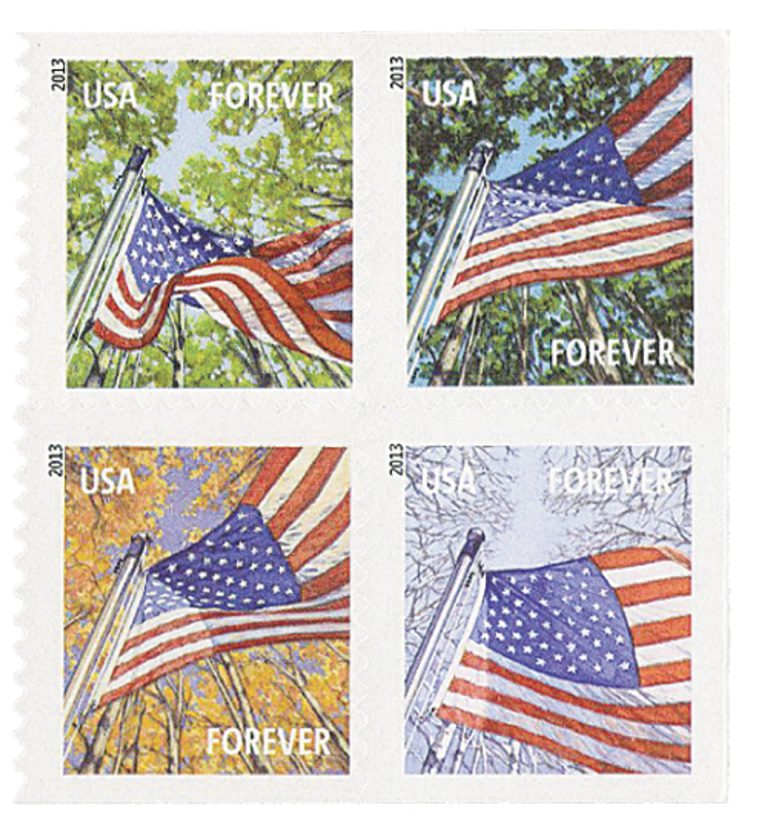
Artwork can help identify an era, theme, or issue. The word “Forever”—not the presence of a bell, flag, flower, or other subject—is what signals the ordinary rate-linked designation.
05 · Expansion
From one Liberty Bell design to the standard one-ounce format
For its first several years, the Forever concept was closely associated with the Liberty Bell. The program then broadened across more designs and formats until the designation became a normal part of modern one-ounce stamp issues.
The Liberty Bell begins the format
The first Forever Stamp goes on nationwide sale April 12 for 41 cents, giving customers a stamp whose value follows the one-ounce letter rate.
The visual vocabulary expands
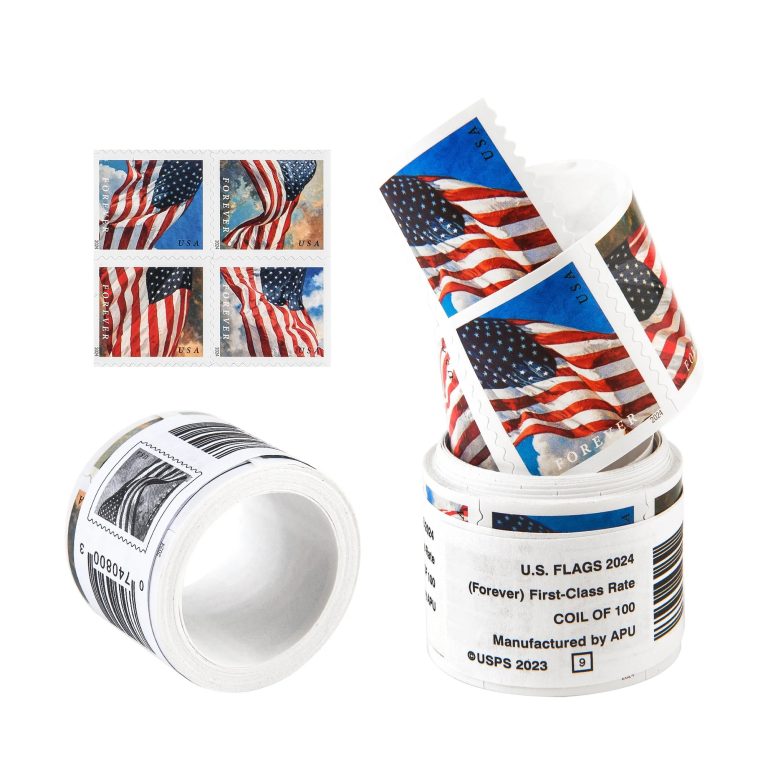
Additional subjects and formats appear, including Holiday Evergreens and coil issues featuring Lady Liberty and the U.S. Flag.
New commemoratives become Forever
USPS moves new First-Class Mail commemorative stamps to the Forever format, separating collectible subject matter from a fixed printed cent value.
The format becomes the modern norm
According to the Smithsonian National Postal Museum, all new one-ounce stamps had adopted the Forever designation by this point.
The original rule still does the work
The domestic stamped one-ounce letter rate is 82 cents as of July 12, 2026, and an eligible older Forever Stamp carries that current value.
06 · Visual archive
The format stayed constant while the imagery changed
Once the Forever designation expanded, stamp artwork could move freely among civic symbols, seasonal subjects, flowers, landscapes, animals, and commemorative themes. The service rule remained familiar even as the imagery became much broader.
07 · Reading the name correctly
What “Forever” does—and does not—mean
The name is memorable, but its meaning is specific. It describes how the stamp’s postal value relates to a defined mailing rate. It does not make every envelope eligible for one-stamp postage.
A rate-linked one-ounce value
- A genuine unused ordinary Forever Stamp keeps the current domestic one-ounce single-piece letter value.
- The purchase year does not reduce that qualifying postal value.
- Older Forever issues can be combined with other postage when a mailpiece needs more.
- The designation works across many different subjects and physical formats.
Unlimited postage for every mailpiece
- It does not automatically cover extra weight, oversized envelopes, or nonmachinable characteristics.
- It does not turn ordinary domestic postage into international postage.
- It does not guarantee delivery speed or include optional postal services.
- It does not describe physical durability, condition, authenticity, or resale value.
08 · Everyday legacy
Why the idea still feels useful
Forever Stamps reduced one small point of friction in ordinary correspondence. A household can keep a modest supply for bills, invitations, notes, cards, and personal letters without replacing that supply solely because the basic one-ounce rate changes.
For offices and organizations, the same principle simplifies inventory: the usable value of qualifying Forever Stamps follows the current rate. For stamp designers, the absence of a printed cent amount also lets an issue remain current through later price changes.
The system is not a substitute for checking the mailpiece. A heavy card, rigid enclosure, square invitation, large envelope, or international letter can still require a different amount. What the format removes is narrower but meaningful—the need to repair an ordinary one-ounce stamp after each basic rate increase.
Forever did not make postage rules disappear. It made one recurring rule change easier for the public to absorb.
Forever Stamp Guide · Editorial conclusion
09 · Frequently asked
Common questions about the origin of Forever Stamps
Why were Forever Stamps created?
They were created to make postal price changes easier for customers. When the basic one-ounce letter rate changes, a genuine unused Forever Stamp continues to cover that current rate, so it does not need make-up postage solely because it was purchased earlier.
When was the first Forever Stamp issued?
The first Forever Stamp, featuring the Liberty Bell, went on nationwide sale on April 12, 2007.
How much did the first Forever Stamp cost?
It was sold for 41 cents, the First-Class Mail one-ounce letter rate associated with its 2007 introduction.
Is an old Forever Stamp still valid?
Yes, if it is genuine, unused, and bears the Forever designation. It carries the current domestic First-Class Mail one-ounce single-piece letter value, regardless of the year in which it was purchased.
Does one Forever Stamp cover every kind of mail?
No. The ordinary Forever designation corresponds to the domestic one-ounce single-piece First-Class Mail letter rate. Extra weight, nonmachinable features, large envelopes, international destinations, and optional services can require additional postage.
Are all one-ounce stamps Forever Stamps?
Many modern one-ounce First-Class Mail stamps use the Forever format. Older stamps printed with a fixed cent denomination remain valid at that printed value; they do not automatically become Forever Stamps.
Was the 2008 Liberty Bell stamp the first Forever Stamp?
No. The original Liberty Bell Forever Stamp was introduced in 2007. The 2008 Liberty Bell image used in this article is a later issue from the same early visual period.
10 · Editorial record
Sources and date of reference
This history was checked on August 18, 2026. Dates and program history are drawn from official USPS material and the Smithsonian National Postal Museum; the current price comes from the USPS price list effective July 12, 2026.